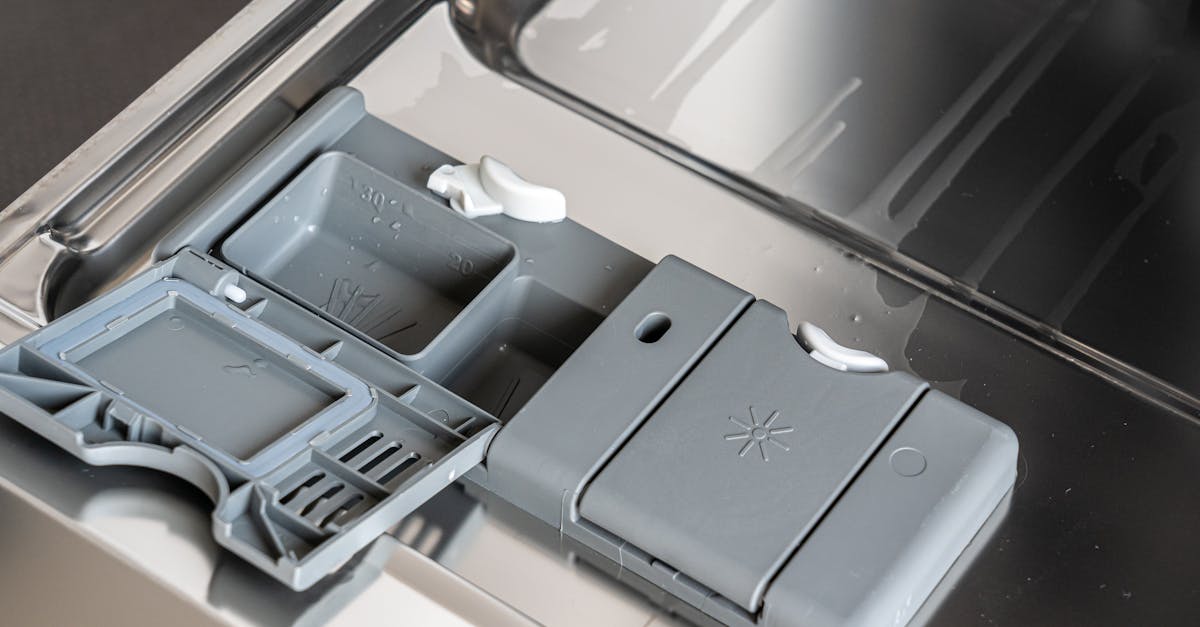
If your dishwasher leaves gritty bits on glasses, smells musty or drains slowly, the filter is the first place to look. Many modern dishwashers use a manual filter that the owner is expected to clean, but plenty of people do not know it exists.
Key Takeaways
- Many dishwashers have a removable filter at the bottom of the tub that should be cleaned regularly.
- Clogged spray arm holes cause uneven cleaning.
- Hard water and too much or too little detergent can leave cloudy films.
- Check the manual for your model’s maintenance schedule.
Find the filter
Remove the bottom rack. The filter is usually a cylinder in the centre or back corner of the tub floor. Many twist counterclockwise to unlock, then lift out with a flat mesh piece underneath. Check your manual for your model.
Clean the filter
- Rinse the filter under warm running water.
- Gently scrub with a soft brush and a little dish soap to remove grease and food.
- Do not use wire brushes or scouring pads, which can damage the mesh.
- Reinstall it and lock it in place.
Manufacturers’ recommendations vary, often ranging from monthly to every few months, depending on how much you use the dishwasher and how much you rinse dishes beforehand.
Clean the spray arms
Lift or unscrew the spray arms, according to the manual. Check the holes for debris and clear them with a toothpick. Rinse and reattach. Make sure arms spin freely.
Wipe the door seal and edges
Food and grime collect on the door gasket and the bottom edge of the door, which the spray does not reach. Wipe them with a damp cloth and mild soap.
Run a cleaning cycle
Use a dishwasher cleaner product according to the label, or follow the manufacturer’s recommended cleaning method.
Fixing cloudy glasses
- Hard water film: a rinse aid helps water sheet off. Some dishwashers have a water hardness setting.
- Etching: permanent cloudiness can come from soft water and too much detergent; reduce detergent.
- Detergent residue: use the right amount and type.
Loading tips
- Scrape food off but avoid heavy pre-rinsing; detergents are designed to work on some food soil.
- Do not block the spray arms with tall items.
- Face dirty surfaces toward the spray.
- Run the kitchen tap until hot before starting the dishwasher.
When to call for service
If the dishwasher does not drain after cleaning the filter, shows error codes, leaks or makes grinding noises, consult the manual or a technician.
Frequently Asked Questions
Do all dishwashers have filters? Most do. Some older models have self-cleaning filters with grinders.
How do I fix a smell? Clean the filter, door seal and spray arms, and leave the door slightly open after cycles to let it dry.
Are dishwasher pods better than powder? Both can work well. Follow the manufacturer’s guidance and adjust for water hardness.
The bottom line
Clean the filter regularly, clear the spray arms and wipe the door seal. Most residue and odour problems disappear.